
  |
|
January 19, 2023 |
 With the traditional ringing of the bell we bring this meeting to order!
Club member's attendance is recorded by logging in.
Visiting Rotarians may complete a makeup form at the end of this meeting; YOUR donation for making up with us helps fund our service projects!
Visitors are always welcome to browse and register without obligation.
Our club offers the flexibility of ROTARY ON YOUR TIME!
and an opportunity to remain connected with Rotary!

Welcome to this week’s meeting of the eClub of the State of Jefferson.
I am Bob Gibson, President of the Rotary eClub of State of Jefferson. Welcome to this week’s meeting. I hope this finds you well.
I attended the District Quarterly Grant meeting last Saturday. It was interesting and motivating. I came away with renewed appreciation for the resources that are available to all of us. District 5110 is actively involved in many extraordinary projects. Our eClub has used this process with our work in Guatemala and with the Navajo Nation. If you have ideas or have come across needs that could be addressed with Rotary resources, please let me know. Each of these projects started with a Rotarian identifying a need and acting on it.
Thank you for your interest in our Club and your commitment to “Service above Self.”
Enjoy the meeting.
If you have any questions or comments, I am available. My e-mail address is: bob@bluewaterphoto.net.
email president@StateOfJeffersonRotary.org

District 5110 Rotary Foundation Committee hosted the 3rd quarter grants meeting on January 14th. There were 80 people on the zoom call. The guest speaker was Rachel Hermes who is on staff at the Foundation. She spoke about Programs of Scale grants. Very interesting and spoke directly to the impact Rotary work can have on the world.
Other segments focused on ongoing work in Ukraine by Rotarians, the launch of a new podcast called Voices & Stories, update from Trustees meeting, a new position / resource for clubs who wish to do international work, and 2 global grant projects approval. It was a great day sharing and celebrating a little bit of what 5110 Rotarians do making the world a better place.
Link to meeting recording
In Service
LeAnn Mobley
Grants Subcommittee Chair
District Rotary Foundation Committee
Recruit Rotary Peace Fellow candidates from your community
 Districts and Rotary and Rotaract clubs play a key role in recruiting and recommending Rotary Peace Fellow candidates. Each year, The Rotary Foundation awards fellowships to leaders in peace and development to study at one of the Rotary Peace Centers at premier universities around the world. The fellows can earn a master’s degree or a professional development certificate. The application will be open early February through 15 May this year, and selected peace fellows will begin their studies in 2024. Find out who is eligible and what they need in order to apply.
If you know any mid-career change-makers or any young professionals who have peace-building experience, help them apply for a fully funded Rotary Peace Fellowship. Connect with your district Rotary Peace Fellowship subcommittee chair to learn more about members’ role in selecting peace fellows and get involved.
Since the Rotary Peace Centers program began in 2002, more than 1,600 fellows have graduated from our programs. They are now working on peace and development initiatives in more than 140 countries. Many serve as leaders in government, nongovernmental organizations, education and research institutions, peacekeeping and law enforcement agencies, and international organizations like UNICEF, the United Nations, the World Bank, and the International Federation of Red Cross and Red Crescent Societies. Follow the Rotary Peace Centers Facebook page for updates about peace fellows’ work.
January is Vocational Service Month

Rotary Service in Action is a Rotary blog to help our members and supporters plan effective and inspired service projects. We offer resources, best practices, success stories and lessons learned to keep you informed and introduce you to new ideas.
As members of the Rotary family, we are 1.2 million neighbors, friends, and community leaders who come together to create positive, lasting changes in our communities and around the world. Our diverse occupations, cultures, and backgrounds give us a unique perspective. Our shared passion for service drives us to take on the world’s most challenging problems.


3 ways to make your club more inclusive
 By Katey Halliday,
Rotaract Club of Adelaide City and the Rotary Club of Adelaide Light, South Australia, Australia
Rotary recently adopted a diversity, equity, and inclusion statement that sends a strong message that we embrace inclusivity. Rotary has clubs all over the world and reaches a broad range of people with our service projects. So we are already diverse, but a second ingredient, inclusion, is the key to unlocking and maintaining the full benefits of that diversity. How inclusive is your club?
Verna Myers, founder of the Verna Myers Company and vice president of Inclusion Strategy at Netflix, has explained the difference between the two concepts as “Diversity is being invited to the party, inclusion is being asked to dance.”
In the context of Rotary membership, this means it is not enough to invite people from diverse backgrounds to our meetings and events. We need to include them in club planning and decision making, and value their contributions.
Below are some ideas for cultivating inclusion:
Make your club accessible
- Do you meet in a convenient location for everyone? If not, consider meeting in more than one venue.
- Can people find information if they are unable to attend?
- Does the time of your meeting work for the demographic you are trying to attract? You could provide options, such as some morning and some evening meetings. Not every meeting needs to include a meal.
- Are there any unnecessary costs that block some from attending, such as the cost of a meal? A limited menu can also create unintentional barriers for those with dietary restrictions. Also consider providing the choice of not eating at all.
- Can you bill for fees on a monthly or quarterly basis instead of annually, for those who would manage better this way? You could set up a small premium to cover the added cost.
Give all members something meaningful to do
This requires club leaders to understand why each member is there and determine what activities would fulfill their passion and purpose for joining. It is sometimes easier to do a task yourself then delegating, but handing tasks over to someone new is a great way to include them.
Provide diversity and inclusion training
Every club can benefit from an honest discussion about these topics. I have received feedback from many members and have heard in consulting with districts that some people hesitate to join because of inappropriate comments or behavior they have experienced. Bring in a speaker or conduct a training session on any of the following topics:
- Using inclusive language: Learn about the effects our words have on creating a culture of normalised behavior. Gendered language, for instance, is a barrier toward achieving gender equality. To achieve the goal of having women comprise 30 percent of membership and leadership by June 2023, we need to take positive action in this arena.
- Detecting and avoiding unconscious bias and discrimination. Sometimes people can unintentionally be treated unfairly because of a personal characteristic.
- Understanding and avoiding sexual harassment. The “me too” movement has raised awareness of sexual harassment. Bring in an expert to raise your club’s awareness of the issue and what they can do to prevent it.
- Calling out inappropriate behavior as a bystander. David Morrison, retired Lieutenant General of the Australian Army, and current chair of Diversity Council Australia, notes “the standard you walk past is the standard you accept.”
- Participate in International Women’s Day, Harmony Day, your local Pride celebrations and other days that celebrate diversity.
There are many strategies your club can employ. But for any to work, you must accept that change is vital to Rotary’s continued success. We can admire Rotary International for approving the diversity, equity, and inclusion policy. Now it’s up to members to work it down to the club level. Learn what your club can do about diversity.

A polio survivor’s plea: Don’t let this happen to you
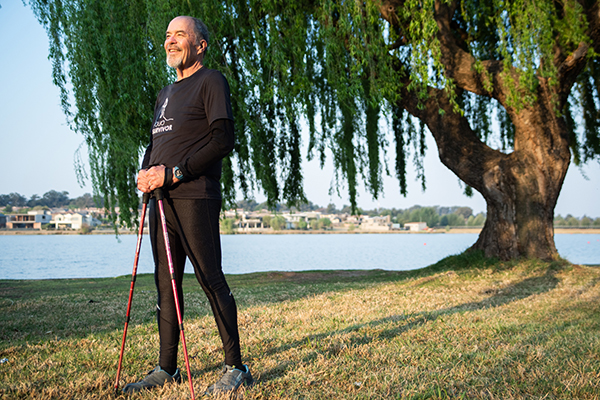
By Div Louw, Rotary Club of Benoni, South Africa
I was a typical, energetic four-year old in South Africa, running around our house with visions of my hero, long distance runner Jan Barnard, in my head when I felt something wrong. I ran inside and told my mother, “I have a dripping tap in my chest.” This was my way of describing what I felt, my heart skipping beats now and again. My mom, Christine, pressed an ear to my chest and called our general practitioner.
That would be the last day I would run imaginary races with Barnard. I had contracted spino-bulbar polio, which destroys neurons in the brainstem causing respiratory or cardiac failure. I was given less than a 2% chance of survival. This was in 1955, during a polio epidemic in South Africa, months before the Salk Vaccine was declared safe and effective.
I spent the next six months in isolation, staring at my parents through the window of an isolation ward. They would bring me beautiful presents, but I never got them. I thought the nurses had stolen them, and because I was paralyzed, I could not help myself. Later, I realized I had a room full of gifts back at home.
When I was discharged, the doctors were of the opinion I should undergo surgery, and that I should be put into casts and spend six months in recovery. They gave me very little chance of not being crippled. My Dad had a different opinion. He bought me a Fire Brigade (a bright red toy riding truck), and offered me a choice.
“Son, you can either go into the hospital and get leg calipers and hope you can be able to walk again or you can take this (toy truck) and do what you do best.”
That was the trigger for everything that followed. I loved that Fire Brigade. We became inseparable and it became my substitute legs. I eventually graduated to a bicycle and spent a lot of time getting up and dusting myself off. Then I learned to swim in the warm waters of a spa resort during family holidays, exuberantly applying my new-found unrestricted activity.
And something amazing happened. My broken body adapted. Nerves sprouted detours, surrounding muscles took over functionality of paralyzed ones. I almost looked and functioned normally. Almost.
It was at university when I dared train around other athletes that a passion rekindled to be a real athlete. I learned to play squash and joined some low-rated team rugby games. After college, I continued to play squash somewhat seriously.
But polio never really leaves you. During training for a league game, I once again became aware of my famous childhood foe. My heart skipped beats, I developed twitches and tremors. Once more in the Pretoria hospital, Professor Ben Lotz and his clinical assistant delivered dreadful news, the affects of polio had returned, I was suffering from what many know as postpolio syndrome. I was advised that I would soon be immobile, and my family was cautioned I may spend the rest of life in a wheelchair.
I did the only thing I knew how, I remained mobile and active.
In 2018, I saw a neurologist for a routine exam including an MRI and brain scan, and he once more expressed surprise that I was still walking. I took the news seriously, and prepared for possible immobility, shedding excess weight.
I started exercising. Walking. Then cycling. And finally, I returned to my favorite activity, swimming.
At the age of 70, I discovered para sport and became a triathlete. I was classified PTS-3 and after acquiring some regional medals, received gold in my category at the Africa Triathlon Championships in Sharm El Sheikh, Egypt, in 2021. I am now training to compete in Morocco at the championships 24-25 September, with a goal of under two hours to earn ranking for Paralympic participation.
I saw something in Egypt that moved me to want to advocate for these amazing para-athletes. They are responsible for every aspect of their own participation. They make all their own arrangements and cover all expenses, down to the last dime. They compete for the sake of the challenge, the thrill of achieving the impossible. While they could always use financial support, they deserve an accolade for their tenacity at the finish line.
I also knew I wanted to advocate for ending polio. But I knew I needed allies to do so. I searched the Internet and discovered that Rotary has been committed to eradicating polio for decades. Heeding the advice of a friend and member of the Rotary Club of Benoni, Annie Steijn, I attended a postpolio syndrome advocacy group. In July, I joined the club, and became one of its newest advocates for End Polio Now.
The intensity of my plea comes from experience. When I hear about resistance to vaccinations, and read about polio being detected in places including Europe, I want to tell people: Don’t let this happen to you. It must not. It cannot. Vaccines work. If I had a choice, I would have taken the vaccine.
The Rotary Club of Benoni and the District 9400 PolioPlus committee have started a Back-A-Buddy campaign to support my training with all proceeds going to Rotary’s PolioPlus Fund. See my Facebook page or contact grace@gracevanzyl.com for more information.


R.E.A.D. in Beauty Bookmobile
Read. Empower. Adventure. Dream.
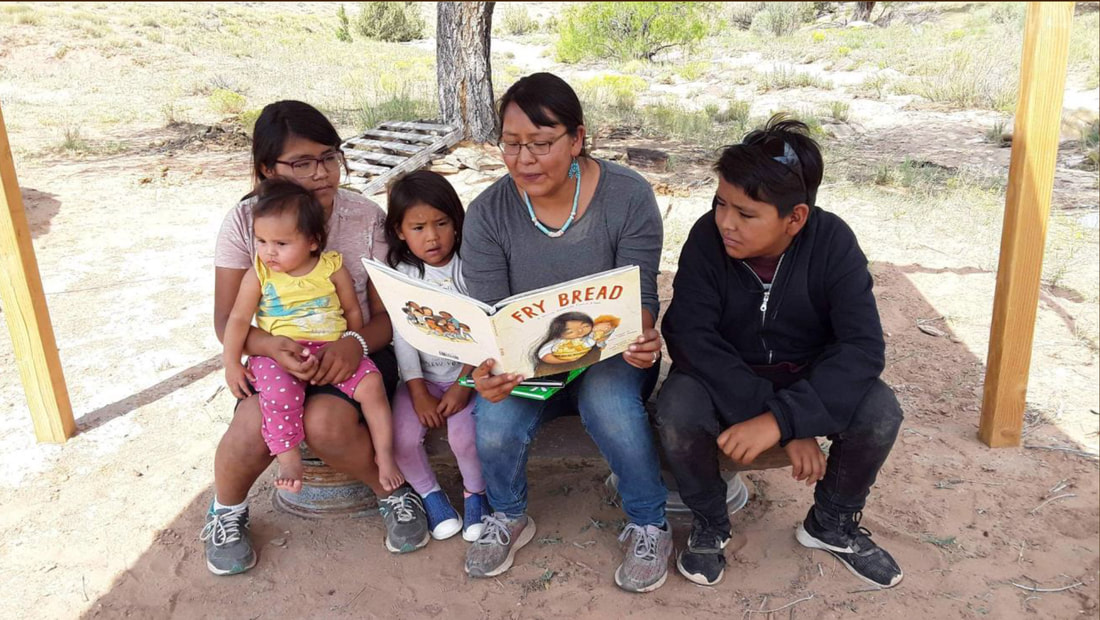

The Bookmobile has been funded and ordered but there have been many delays because of national microchip shortages for FORD! But we continue to move forward as we're anticipating the new van and CPH is now entering into our second phase of the project...
WE INVITE YOUR SCHOOL, BUSINESS, FAITH COMMUNITY OR ANY OTHER ORGANIZATION TO BECOME A BOOKMOBILE COMMUNITY PARTNER:
1. Community Partners adopt the R.E.A.D. in Beauty Bookmobile for a calendar month and help cover the monthly operational costs (approximately $5000).
2. Community Partners can also collect new or used books for the Bookmobile (optional).
3. Community Partners will be named on the actual Bookmobile and listed on our website, social media posts etc. for the year.
COMMUNITY PARTNERS ARE ESSENTIAL FOR KEEPING THE BOOKMOBILE PROJECT SUSTAINABLE. PLEASE CONSIDER JOINING OUR COMMUNITY PARTNERSHIP TEAM!
JANUARY: The University of Utah Pediatric Department
FEBRUARY:
MARCH:
APRIL: Rotary eClub of the State of Jefferson (D5110)
MAY:
JUNE: Flagstaff BOOKMANS Bookstore and Coffee Shop
JULY:
AUGUST: Chinle Unified School District
SEPTEMBER:
OCTOBER: Chinle IHS Hospital Alumni
NOVEMBER:
DECEMBER:
THANK YOU SO MUCH COMMUNITY PARTNERS!
1. Patricia, Miriyam, Sue and Paula in LA that have worked SO many hours on the Bookmobile proposal and details!!!
2. The Shurl and Kay Circi Foundation
3. Babbitt Ford in Flagstaff, AZ. - Thank you Mr. Alan Chan for helping us order and convert the Transit Van into a Bookmobile
4. Private Foundation in Phoenix, AZ that donated $40K in our initial stages. (Biggest Hugs Friends!)
5. ALL of our wonderful GoFundMe supporters over the past year during our start up campaign! Each and every gift made a difference.
6. SFNT Foundation
7. Desert Ford Foundation
8. Ford Operation Better World

January is Vocational Service Month
How Mohawk ‘Skywalkers’ Helped Build New York City's Tallest Skyscrapers
 Native Americans aren’t often associated with New York City and its dense, vertical landscape. With so many Indian nations pushed to America’s frontier in the 19th century, they usually appear in popular culture as denizens of the rural West, occupying wide open spaces replete with tipis, buffalo and pow wows. Yet the Mohawk Nation has deep roots in metropolitan New York City—where, beginning in the early 20th century, Kanienʼkehá꞉ka, or Mohawk, ironworkers contributed to building many of the iconic skyscrapers that dominate the Manhattan skyline.
These “Skywalkers” have for generations travelled far and wide to work on the “high steel,” bringing back good wages to support their home communities such as Kahnawake, Six Nations Reserve and Akwesasne in northern New York State and southeastern Canada.
“It became a rite of passage really,” said Lynn Beauvais, a Kahnawake resident and grandmother from a fourth-generation ironworker family, in an interview with HISTORY.com. “The men were thrilled to be working away from home and seeing new sights. They were a band of brothers. But our men had always traveled—for the hunt, the fur trade or as lumber men.”
Origins of the Mohawk Skywalkers
The Mohawk Skywalker tradition began in 1886 when some daring Mohawk men from Kahnawake took jobs helping build the Victoria Bridge across the St. Lawrence River, which borders their reserve near Montreal. Just as early European settlers had observed Mohawks walking fearlessly across rivers on narrow logs, early ironworkers showed an unusual aptitude for climbing and working on steel beams. Having once hunted, trapped and farmed throughout the northeast woodlands, the Mohawks of the Haudenosaunee, or Iroquois Confederacy, eventually took to the high steel in burgeoning metropolitan areas. These indigenous riveting gangs spoke their native languages on the job while helping to build the Chrysler Building, Empire State Building, Rockefeller Plaza and many other structures that shaped the New York City skyline in the 1920s and 1930s.
Quebec Bridge Disaster
The Skywalker tradition nearly came to an end in 1907 when 33 Mohawk men from Kahnawake died during a collapse of the Quebec Bridge near Quebec City. More than two-thirds of these men were married, leaving behind dozens of children and 24 widows. The resilient Skywalkers rebounded, but only after Mohawk women demanded that they not work together in family groups. They would instead work in dispersed riveting gangs, lest another disaster wipe out such a wide swath of one family.
Beauvais said it was typical for women to call the shots. “Women always chose the chiefs because they lived in matrilineal clans and saw the boys grow up,” she said. “They would choose leaders because they knew about their boys’ characteristics from infancy to manhood.”
What began as a high-paying vocation became a tribal tradition as fathers and grandfathers taught their sons and grandsons to handle their fears effectively. The Skywalker tradition was passed down for many generations as Mohawks worked the high steel from Ontario to Chicago and Philadelphia, and as far away as San Francisco. They even established a neighborhood of their own in Brooklyn, New York.
Little Caughnawaga: Brooklyn’s Mohawk Community
By 1960 Atlantic Avenue and the Boerum Hill area of Brooklyn was home to about 800 Mohawk ironworkers and their relatives. Many frequented the Wigwam Bar and attended a church run by Rev. David Munroe Cory, who even learned the Mohawk language to give sermons in their native tongue. Storekeepers supplied ingredients for favorite Mohawk recipes like cornbread with beans. This enclave of indigenous tradesmen centered around the Brooklyn Local 361 Ironworkers’ Union, made up largely of Kahnawake Mohawks. Old-timers in the Brooklyn neighborhood, known as Little Caughnawaga (an early spelling of Kahnawake), would recall the booming 1920s and 1930s when the Mohawk Skywalkers became legend while building the nation’s most bustling metropolis. Above the entrance to the Wigwam was a sign that read, “THE GREATEST IRONWORKERS IN THE WORLD PASS THROUGH THESE DOORS.”
Riveting Gangs
Skyscrapers of the ’20s and ’30s were framed with steel columns, beams and girders fitted together by four-man riveting gangs. One man called a “heater” fired the rivets in a portable forge until they were red-hot, tossing them to the “sticker-in” who caught it in a metal can or glove. The “bucker-up” braced the rivet with a dolly bar while the “riveter” used a pneumatic hammer to mushroom out the rivet stem to secure the locking steel.
They took turns on each job while standing on narrow scaffolding hundreds of feet above the street. “It was always windy up there, and in winter the men cleaned off the steel beams of ice and snow before working on them,” Beauvais said. “In the old days there were no safety lines, and they didn’t wear helmets. It was hard work, but they never talked about the danger. Our men have always really enjoyed their work and were proud of it.”
Heyday of Skyscraper Building
Advances in metallurgy during the early 1900s had made it possible for architects to design much taller buildings using a skeleton of hardened steel, fastened by riveting gangs. During the 1920s, this led to a “race to the sky” as some of the most notable skyscrapers in Gotham began to take shape. Mohawks worked on the 1,046-foot Chrysler Building, a stainless-steel-sided Art Deco masterpiece that was completed in 1930. It was the tallest building in the world until, less than a year later, it was surpassed by the Empire State Building at 1,250 feet, also with the help of Mohawks. Skywalkers then helped out on Rockefeller Plaza, which was finished in 1933.
Lynn Beauvais’ grandfather Joseph Jocks worked on several of them. He told her that during the Great Depression men were desperate for jobs. “Men would wait in the street for someone to fall off so they could take their job. My grandmother would walk miles to find day-old bread to eat, but they survived.”
Beauvais was proud of her grandfather’s work on the Empire State Building, once the tallest building in the world. “But when I got older, he told me there were going to be other buildings even taller—the World Trade Center towers. I was sad that my Empire State Building was going to be outdone, but Joe Jocks also went to work on the Trade Towers.”
Skywalkers at the World Trade Center
Hundreds of Mohawk ironworkers went to work on the World Trade Center towers in the late 1960s. Beauvais watched the towers rise from her mother’s kitchen window in Brooklyn. Her grandmother said not to visit the job site to see what the men do. “‘It’ll make you nervous,’ she said—and it does. I went to lower Manhattan later to see my brother Kyle Beauvais. He was working five stories up, and I saw him walking on the outside of the building to come see me. I couldn’t stand to watch him.”
After the 9/11 terrorist attacks destroyed the World Trade Center towers, Mohawks, familiar with steel work and crane operations, went to Ground Zero to help clean up—including members of the Beauvais family. “My brother Kyle went in eight hours after the towers came down. My grandfather had worked on the construction of the towers and retired on that job. My brothers worked on their final demolition and sent them to the scrapyard.”
Although much lore has arisen over years about the Mohawk’s innate balance and fearlessness at great heights, Skywalkers say it is more a matter of controlling their fear and learning from elders how to trust one another. The riveting gangs have now been replaced with advanced technology, but the work is still dangerous. Ironworkers still die on the job at a rate of 35 to 50 fatalities each year—most of them from falls. Many Mohawk ironworkers have fallen to their deaths while on the job. Steel girder crosses mark the graves of fallen Skywalkers in the Kahnawake cemetery.
weekly@StateOfJeffersonRotary.org

New laser experiment reveals how high poop particles may blast after we flush
A never-before-seen look at bathroom physics.

This summer, in Boulder, Colorado, John Crimaldi and his team of civil and environmental engineers gathered around a toilet — for science.
They positioned a laser to beam green light above the lidless bowl: If any normally invisible particles emerged as the toilet flushed, they hypothesized, they would scatter the light and appear as green dots. To record the potty dynamics, the team rigged up a camera a few feet away. Then … flush.
What happened next silenced the researchers. “We were all just stunned,” recalls Crimaldi. “We saw this incredibly energetic jet of particles shooting up towards the ceiling.”
Their laser caught a cloud, or plume, of particles flying into the air — then lingering there. “People just started laughing. They were like, ‘Oh, my God, you've got to be kidding me. That's what happens when you flush the toilet?’”
What’s new — In a study published today in Scientific Reports, Crimaldi’s team from the University of Colorado describes how their laser-based rig visualizes lidless toilet plumes in more detail than ever seen before.
Scientists who study invisible airborne particles have reported for over a decade that lidless public toilets can eject tiny droplets that contain urine, feces, and potentially dangerous pathogens into the surrounding environment. But it’s not clear how exactly how this dirty exchange goes down.
Now, this new study is among the first to dive into those muddy waters. The laser rig allowed the team to not only see the plume and watch its shape evolve with time, but also to count and measure the speed of erupting airborne particles.
Here’s the background — All the unsettling aerosol action begins with a flush. In North America’s public restrooms, flushes are powered by a flushometer, a mechanical diverter that evacuates and replaces water without a tank. If you’ve done your business in an American airport, school, or mall, you’ve seen these things.
A flushometer will yeet the visible evidence of the stall’s previous occupant away into the pipes. But what about the invisible stuff that can make us sick?
Viruses and bacteria, such as SARS-CoV-2 and Clostridium difficile, can spread via aerosols that travel from butt to toilet to lung. Even if the toilet water holds no urine or feces, it might contain Legionella, which can cause severe lung infections.
“The bowl water in a toilet contains elevated levels of pathogens for dozens of flushes after that contaminated feces was put in there,” Crimaldi says. By studying these public plumes in close detail, researchers could help mitigate the spread of toilet-derived diseases.
Why it matters — The recent experiment highlights just how far the particles may travel, hang around, and wreak illness. “Seeing is believing,” says Evan Floyd, an industrial hygienist and environmental health scientist at the University of Oklahoma Health Science Center who wasn’t involved in the new study. After all, a more knowledgeable public can be a healthier public. “That's really important, and there's probably a lot of value to that.”
These findings could also guide changes in toilet design, toilet operation, plumbing, or even ventilation, according to Crimaldi, and improve sanitation in crowded buildings like schools, offices, and hospitals, where potentially fatal pathogens can quickly spread.
You may wonder: Why can’t public toilets just have lids? Closing the lid before flushing does reduce a toilet’s plume significantly. But adding one more surface to sanitize — one more surface for people to touch — increases the risk of fecal-oral transmission.
“Somebody along the way has made the decision that the fecal-oral contact hazard was a greater risk and expense than toilet flush aerosol,” Floyd says. “But frankly, people really haven't believed that there's much toilet flush aerosol for a long time. It's only in the past 10 years or so that it’s becoming more accepted.”
So far, our grasp of the physics of flush plumes remains crude. In recent years, scientists have reported high-speed video of droplets and computer simulations of the physics involved. But neither visualize nor quantify what’s happening with the tiniest of toilet particles.
What they did — Using a flushometer-powered commercial toilet, Crimaldi’s lab sought a comprehensive view of toilet plumes (sans the usual excrement). The 5-nanosecond-long laser pulses blasted every 100 milliseconds or so, somewhat like a green strobe.
The scientists measured how the shape of the plume evolved over time by snapping images of the illuminated aerosols every few seconds after flushing.

Each laser pulse captured by the camera provided a freeze frame of aerosols, which they could analyze with a special algorithm to sketch out the particle velocities throughout the plume.
They noticed that the plume quickly shot up and back toward the wall behind the toilet. The densest region of particles — which would likely contain the highest concentration of pathogens — surged about a foot above the toilet bowl within 5.5 seconds. Within 8 seconds of a flush, the researchers observed that particles shot up about 5 feet. “That’s in most people’s breathing zone,” Floyd says.
Aerosols continued to spread over 60 seconds. “Most people don't realize there are fine particles everywhere,” Floyd says. “It's nice to have the quick visualization.”
In fact, Floyd suspects Crimaldi’s particle count might be conservative. Water from aerosols will evaporate, so the team likely measured less intensity over time. But in practice, he says: “All the solids are still there. So just like with COVID, you might have these respiratory droplets that are 2 to 10 microns in diameter.”
“The solids just go wherever the wind will push them,” he continues, even outside of the stall. Ventilation pushes particles around. Opening the stall door and walking create eddies that circulate aerosols. “The real problem with fine aerosol is there's no real good way to remove them outside of taking all of that air and passing it through a cleaning mechanism.”
What’s next — Crimaldi hopes that as the public comes to terms with the intensity of toilet plumes, industrial hygiene will improve. To boost bathroom sanitation, ventilation can be added above the plume. Maybe some UV disinfection, too, or gizmos called electrostatic precipitators that remove particles with an electric charge.
The team hasn’t repeated their experiment with excrement in the bowl, but Crimaldi is optimistic about the laser-based visualization method. “This gives us a tool for being able to test new toilet designs,” he says. He imagines that engineers could tinker with variables like water pressure, flush intensity, and bowl shape when brainstorming future commercial toilet concepts. Moving forward, this study can offer them a baseline with which to compare their work.
Redesigns may be tricky since changing each element could make toilets less efficient or effective at what they do well now, but Crimaldi maintains that it will be critical to address the plume hazard: “Look at the video,” he jokes. “It couldn't possibly be worse.”
You are not authorised to post comments.