
  |
|
November 10, 2022 |
 With the traditional ringing of the bell we bring this meeting to order!
Club member's attendance is recorded by logging in.
Visiting Rotarians may complete a makeup form at the end of this meeting; YOUR donation for making up with us helps fund our service projects!
Visitors are always welcome to browse and register without obligation.
Our club offers the flexibility of ROTARY ON YOUR TIME!
and an opportunity to remain connected with Rotary!

Welcome to this week’s meeting of the eClub of the State of Jefferson.
I am Bob Gibson, President of the Rotary eClub of State of Jefferson. Welcome to this week’s meeting. I hope this finds you well.
The meetings among business colleagues, organized by Paul Harris in 1905, were for the purpose of creating fellowship. Paul Harris found himself alone in Chicago and desiring friendships in the business community. The “service” component came along a bit later. Now, with the creation of an eClub, we find ourselves challenged to strengthen the fellowship within our Club. I attended a retreat for District 5110 club presidents last weekend. We spent most of our time discussing the strengths, weaknesses, and challenges in our clubs. Membership and fellowship were discussed at length. I fielded many questions and comments on how an eClub manages fellowship. I was candid. I told them it was a challenge that we are working on. Zoom meetings are one approach.
We have another Zoom meeting for our members this coming Saturday (November 12th) at 9:00 AM Pacific Standard Time. We will be discussing the proposed changes to our By-Laws, as well as membership. Mitch Allen is preparing a presentation to start the discussion on building our membership. Zoom meetings give us the opportunity to communicate in real time and develop relationships with other club members. I hope you can attend.
Your Board of Directors reviewed and discussed the proposed changes to our By-Laws. Rotarian Carol Fellows and PDG John Cox have worked on developing this proposal. The proposed By-Laws can be found on the Announcements page of this week’s program. It will be a subject of discussion at our Zoom Membership Meeting on Saturday, November 12 at 9:00 AM Pacific Standard Time. If you have questions or comments on the proposed By-Laws, this will be a great time to bring them forward.
Thank you for your interest in our Club and your commitment to “Service above Self.”
Enjoy the meeting.
If you have any questions or comments, I am available. My e-mail address is: bob@bluewaterphoto.net.
email president@StateOfJeffersonRotary.org

eClub Board Meeting
November 17th at 8:00 AM (PST)
 The Rotary Foundation transforms your gifts into service projects that change lives both close to home and around the world.
Since it was founded more than 100 years ago, the Foundation has spent more than $4 billion on life-changing, sustainable projects.
With your help, we can make lives better in your community and around the world.
Our mission
The Rotary Foundation helps Rotary members to advance world understanding, goodwill, and peace by improving health, providing quality education, improving the environment, and alleviating poverty.
What impact can one donation have?
- For as little as 60 cents, a child can be protected from polio.
- $50 can provide clean water to help fight waterborne illness.
- $500 can launch an anti-bullying campaign and create a safe environment for children.


DEI is a difference maker
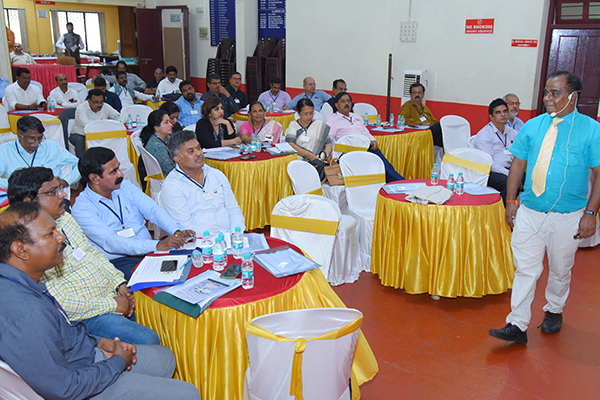
By Mohan Kumar, charter president, Rotary Club of Bangalore Prime, India
I was given the opportunity to establish a plan aimed at increasing diversity, equity, and inclusion in our club as the chair of our DEI taskforce.
We have found that when we approach millennials or women to join Rotary, they look at the level of diversity in our club. We are a four-year-old Rotary club with 34 members, seven who are women. For the current Rotary year, we also have women serving as president, secretary, and treasurer. We have just one member below the age of 40 and six members in the range of 40-49. Through this lens, we knew that we could do better and be more relevant in the communities we serve.
Increasing our diversity, equity, and inclusion is imperative to our success and our future in Rotary. Our goal is cultural change. To do this, we need a shared language, candid conversation, and an understanding of how to be relevant to our communities.
Diversity goes beyond age, gender, race, and ethnicity. The diversity of thoughts and of people fosters a strong sense of belonging. We had a joint meeting with six clubs that I facilitated involving a conversation about DEI. Most of the participants realized the importance of leveraging these initiatives and aligning them to our club goals.
We need to make inclusivity more than an initiative, though, and make it a mindset. Rotary Fellowships and Rotary Action Groups are great pockets of conversation which thrive on inclusivity. We are educating our members about these groups and asking that each member be a part of one Rotary Fellowship and one Rotary Action Group.
“When a flower doesn’t bloom – you fix the environment, not the flower”
Our club members are now encouraged to bring their own projects to the table for discussion. We are working on having hybrid weekly meetings through appropriate IT platforms. This will ensure better attendance and engagement.
To augment our membership, we are considering having potluck dinners. The diversity of the dishes will celebrate different heritages and broaden our cultural understanding. Members are encouraged to bring guests. Many have taken an interest in organizing these dinners ensuring a sense of inclusivity.
To fuel agility, we will have huddles that circumvent boring meetings. These huddles will focus on allowing each person to have the same amount of time to speak as others. The journey of a DEI program is about having candid conversations on an on-going basis. There will be successes and setbacks, but moving forward is critical. We can’t prepare ourselves and Rotary for the future if we are not elevating and activating all people at their fullest capacities.
DEI is the bedrock of any progressive organization.
Learn more about Rotary’s commitment to Diversity, Equity, and Inclusion.


Sign Up for the Benefits of Rotary's Biz Network
By Mike Corwin
One of the great benefits of Rotary is to be surrounded by people who have integrity, are leaders, respect diversity, are wonderful friends, and are dedicated to serving others in need. Well, wouldn’t you also want to do business with one of those grand associates?
 Sign up now with ONE CLICK and reap the many benefits including:
- Finding and doing business with like-minded professionals
- A platform to advertise your business
- Promotion of your business events and list special offers.
- Connect your listing through social media platforms including Facebook, Instagram and LinkedIn.
- A portion of the funds generated from this program are used to support important service work in our local communities.
- Using vocation and friendship as an opportunity to serve others in need.
- You will receive a Rotary Business Network plaque to showcase in your place of business.
- Potential to have your business spotlighted and honored in this District eNews!
So join us, sign up today a Rotary Business Network registration. PDGs Cindi O’Neil and Bill Grile have remained steadfast and dedicated to networking Rotarians who love doing business with other Rotarians! Click here for their letter of endorsement.
Visit the Rotary Business Directory if you have questions.

Your Community Needs You. Give to the Rotary Foundation.
 Every three years your gifts to the Rotary Foundation, Annual Fund SHARE, return in part to fund the important work we do in our local communities today. And if we had only gifted $100,000 more back then, we could have funded all the projects you identified this year as being critical needs in your communities. Gifts to the Annual Fund Share three years ago are now funding $130,000 worth of critical needs in the areas of literacy, food insecurity for youth, maternal and child health, homelessness, economic development, clean water, and disease prevention. These problems sound familiar don’t they? We are grateful for the funds we are now leveraging with Club funds to complete total project benefits of $234,000.
Unfortunately, $25,000 worth of your important community projects could not be funded. There was not enough Annual Fund dollars to go around.
This year, let’s pre-position ourselves to fund all the future needs in our local communities. Please give generously this November, to support the Rotary Foundation! Our target is $30,000. Can you help?

Navajo Literacy Project (NLP)
 The Navajo Nation is the largest reservation by land area in the United States.
During a period of continued COVID that remains out of control on most of the Navajo Nation, traditional Navajo Solar Light (NSL) installations are still not safe and feasible. To continue our service and to bring light to the elders and to students, a bookmobile provides a way that Navajo residents can do those installations for us. The Chinle Plants Hope trained personnel and volunteers, who drive the bookmobile, do the solar light installations … we, Rotary, provides the light kits, tools, and materials required for the installations.
The humanitarian issue is simply this:
- The impact of the COVID pandemic on Navajo children has been significant. Children have been out of school and many lack reliable internet for access to online education.
- 67% of third graders and 89% of high schoolers on the Navajo Nation lack reading proficiency.
- 30-40% of families on the Navajo Nation do not have electricity, running water or toilet facilities in their homes.
- The nearest library is over 70 miles away from the Chinle Chapter of the Navajo Nation.
- Many roads are unpaved dirt, unpassable when rain comes.
- Without solar lights or electricity, elders and children use kerosene to light their homes. This comes with an inherent danger of fire as well as health degradation due to the soot emitted from kerosene lamps.
- The light can be detached and used as a flashlight for safely going outside at night.
- The kit includes a charging outlet for cell phones that enhances the resident’s safety and contact with family.
The Navajo Literacy Project (NLP) addresses all of these issues. The Rotary eClub of the State of Jefferson’s Foundation has donated $5,000.00 towards this project and received word that a District 5110 Grant request was recently approved for an additional $5,000.00
 Significance of R.E.A.D. in Beauty
There is an essential Navajo concept, "Walking in Beauty," which entails living in harmony - Hozho - with both one's self, and the natural world. This concept is centered around making good choices and expressing love.
Chinle Planting Hope has adapted the concept of "Walking in Beauty" to the Bookmobile project. Its goal, and therefore its name, is "R.E.A.D. in Beauty," because it aims to help Navajo children and families experience harmony through expanded educational opportunities in a respectful learning environment.
Chinle Planting Hope ... Contact Us
- Website: www.chinleplantinghope.com
- Email: chinleplantinghope@gmail.com
- Facebook: facebook.com/ChinlePlantingHope
- Linkedln: linkedin.com/company/chinle-planting-hope


After several hours of selling scones on his front lawn in Toronto, David Hove needed a bathroom break. He left his curbside stand unattended for a few minutes, and in that brief time, it was stolen. The whole thing — including the cooler, a wicker folding table and some supplies — had vanished. The only thing left behind was a handwritten sign that read “homemade lemon cranberry scones.” David, 10, had set up a baked goods table on Aug. 27 outside his home. That day, he was selling lemon-cranberry scones — his sister’s specialty. The sibling pair had been running a small baked-goods business called The Hove Delights for about a month. They operated the stand on weekends for a few hours a day. While David dealt with customers, his 15-year-old sister, Kimberly, did the baking and recipe development. Their goal was to earn money. David dreamed of owning an Xbox, and Kimberly wanted a new cellphone. They split the profits. So far, their stand had been a success. They sold sweet treats — such as cinnamon rolls, doughnuts, oatmeal cookies and scones — for between $2 and $3.50, depending on the size of the desert. Kimberly used her mother’s recipe for lemon-cranberry scones, which quickly emerged as the top-selling product. They sold a lot of baked goods and heard plenty of kind words from customers and neighbors, the siblings said. “I felt pretty happy,” David said about his business. He took great pride in independently running the stand, adding that, “I love communicating with other people.” But his excitement turned to disbelief when he returned from the bathroom that Saturday afternoon and saw that his stand had been swiped. The sixth-grader was crushed. “I felt sad. I was thinking it was my fault for leaving it unguarded,” said David, adding that he’s glad he took the cash box and leftover scones inside with him. His sister was discouraged, too. “It was frustrating, because we had that table for a long period of time, and it held sentimental value,” Kimberly said, explaining that her parents received it as a gift from a cousin. Although their profits remained safe, everything else was gone, even a reusable water bottle and paper towel that had been on the table. The theft was captured on a security camera outside the Hove family’s home. The footage shows a man stopping in a white SUV and loading his truck with the siblings’ stand. There also appears to be a child in the back seat of the vehicle. The siblings’ father, also named David Hove, said he was stunned that someone would steal a child’s baked-goods stand. “I was so upset. It was like being kicked in the gut,” he said. “How can somebody do this to kids?” “David was so heartbroken and devastated, and Kimberly as well,” Hove continued, adding that David felt responsible for the ordeal. “They were both so down.” He reached out to neighbors asking if anyone had any clue who the thief was, and no one did. He contemplated calling the police, he said, but decided against it. “I just thought the police are dealing with a lot of other issues, and I don’t want to stretch them thin,” explained Hove, who was surprised by the theft because the family lives in a neighborhood with minimal crime. Still, he didn’t want to ignore the incident. He decided to share the video with local news in the hope that maybe the thief would return the items and perhaps apologize to his children, who, he said, developed a “mistrust in humanity” as a result of what happened. Although the perpetrator never surfaced, as the story spread, a steady stream of support poured in. In a matter of days, the Hove siblings received hundreds of encouraging messages from strangers. Police officers also stopped by to show their support and reinforce that David was not to blame for the theft. “I feel very lucky to be in a community that other people care about every person,” the younger David said. “People went out of their way to help us by reaching out and supporting us,” echoed his sister. David Ricci and his wife, Elizabeth Aiello, live in the same neighborhood as the Hove family, and stopped by their stand multiple times over the past month to pick up treats. They were especially fond of the scones. “I’m not lying when I say this to you: They’re incredible,” said Ricci, 48. Beyond their love of the scones, the couple also admired David’s ambition and wanted to support his entrepreneurial efforts. “I thought it was admirable that he’s trying to reach his goals,” Ricci said. “This kid’s got it.” When he heard that David’s stand was stolen, he and his wife ventured to a hardware store and bought a table and cooler, which they dropped off at the Hoves’ home. David and Kimberly were elated and ready to get back to work. “It felt really great,” said Kimberly, who began baking more scones. “The kids were grateful to be back in business so quick,” her father said. “I’m so proud of them.” Tim Byrne — who lives 55 miles north of Toronto in Barrie — had also seen the story and wanted to contribute. Knowing David was working toward a new Xbox, he decided to deliver one. “I was an entrepreneurial kid my whole life,” said Byrne, 54, who spent his childhood mowing lawns and doing other odd jobs for money. He feared the theft might deter David from staying in business, so he decided to step in. “I hope I inspired him to keep carrying on,” Byrne said. The siblings also received dozens of offers to donate to their business, which they respectfully declined. “We clearly stated how we didn’t want a GoFundMe,” Kimberly said, adding that she is close to being able to buy a new phone for herself. “We wanted to work for the money.” In the past week, Hove Delights has received about 70 order requests — including from fans in the United States — and the siblings are crafting a plan to expand their business to offer shipping options. “People from all over the world wanted to help by buying scones,” said Kimberly, who started 10th grade on Wednesday. “We’re still trying to navigate. We need to make a plan.” In the meantime, though, their father said his children have learned a valuable lesson. “In this world, there are way more good people than bad,” Hove said. “That’s the underlying story here.” A thief swiped David Hove’s table and cooler from his front yard when he went inside to use the bathroom


75th Anniversary of the First Veterans Day Celebration and Free Access to Fold3® on Veterans Day Weekend
Following WWI, the United States commemorated November 11th as Armistice Day. The date was significant since WWI fighting ended on November 11, 1918 (the 11th hour, 11th month, 11th day). However, in 1947, a WWII veteran from Birmingham, Alabama, was the driving force in his community to organize this country’s first Veterans Day celebration. Raymond Weeks believed that all veterans should be recognized – not only those who perished, as was the case for Memorial Day. The idea took root, and eventually, in 1954, Congress passed a bill designating November 11th as Veterans Day.
This Veterans Day marks the 75th anniversary of that first celebration. To honor all veterans, starting Thursday, we are offering free access* to Fold3® on Veterans Day weekend (November 10-13). We invite you to explore our Fold3® collections, find records related to your veteran, and create a Memorial for our Honor Wall. These Memorials contain heroic stories of service and sacrifice and can be shared with others. You can attach military records, stories, journals, and photographs in one place to create a lasting tribute to the service of your veteran. There is no subscription required to view these Memorials. For tips on how to create a Memorial, click here.
 One example of a Memorial is that of Sgt. Daniel P. Matthews, who served in the Korean War. Dan and his twin brother Dave were from Van Nuys, California, and enlisted together in 1951. Dan served in the Marines, while his brother Dave served in the Navy. Dave recalled that each time a round was fired from his Navy ship, he prayed it would keep Dan safe. On March 28, 1953, at Vegas Hill, Korea, Dan charged an enemy machine gun emplacement. The enemy assault was preventing the extraction of a wounded Marine. Though seriously wounded by enemy fire, Dan continued the charge until mortally wounded. He was posthumously awarded the Medal of Honor. Dave accompanied his brother’s body home, and the heartbroken family laid Dan to rest in Sylmar, California.
We owe a debt of gratitude to our veterans and their families. Take advantage of free access to our Fold3® records collections this Veterans Day and explore nearly 600 million records from the Revolutionary War, Civil War, WWI, WWII, and more. Discover incredible details about the courageous men and women who have served to defend and protect our country. Search Fold3® today.
weekly@StateOfJeffersonRotary.org

These new variants all have mutations in the region that binds to cells and infects them, which means that they’re highly transmissible, as prior Omicron variants were. BQ.1 is growing steadily in France, according to the public database of SARS-CoV-2 variants GISAID. By mid-November, European health officials expect the variant to account for 50% of cases in Europe, and to become the dominant strain in that region by early 2023. XBB is growing quickly in Singapore and India. Both variants have spawned new strains that have each picked up an additional mutation to create BQ.1.1 and XBB.1. As of early November, BQ.1 and BQ.1.1, combined, now make up about 35% of new cases in the U.S. Other studies have found similar drops in antibody protection against BQ.1 among vaccinated people. But Ho’s group conducted what is likely the most comprehensive look to date at BQ.1, BQ.1.1, XBB, and XBB.1, and how existing immunity—from the original mRNA vaccines, the new Omicron boosters, and natural infections—stands up to them. Scientists took blood sera from 88 people in five groups (below) and exposed it to the four variants in the lab. Here’s what they found: The results show that people who had been infected with BA.2, BA.4, or BA.5 generally experienced the smallest drop in neutralizing antibody levels against against BQ.1 and BQ.1.1. But people who had three doses of the original vaccine and one Omicron booster produced only slightly better neutralizing antibody protection against XBB and XBB.1 than those who received three doses of the original vaccine. Public-health experts say that while vaccines may wane in efficacy against newer variants, they continue to protect people from severe COVID-19. There is early evidence that vaccine-induced immunity may also produce a broader range of virus-fighting antibodies over time. Read More: BQ.1, BQ.1.1, BF.7, and XBB: Why New COVID-19 Variants Have Such Confusing Names Still, these results are a reminder that vaccines and drug treatments need to evolve with the virus. “These new variants are extremely good at evading our antibodies and are very likely to compromise the efficacy of our vaccines,” says Ho. They may also dodge the available antibody-based treatments for COVID-19, he says. The National Institutes of Health’s COVID-19 Treatment Guidelines currently only include one monoclonal antibody therapy, bebtelovimab, because the virus has evaded all of the previously authorized antibody treatments. But in an October update, NIH scientists acknowledged that the “subvariants BQ.1 and BQ.1.1 are likely to be resistant to bebtelovimab.” The drug is therefore only recommended if people either can’t take the antiviral drugs Paxlovid or remdesivir, or if these medications aren’t available. The virus can evade these treatments as well, but they remain the first line of defense against severe SARS-CoV-2. The good news is that in places where these variants are spreading, they do not seem to be linked to more severe COVID-19 disease—measured by hospitalizations and deaths—than other Omicron iterations. Still, public-health experts say a spike in infections could still strain health resources, especially as other respiratory infections, including influenza and RSV, also gain momentum. The combination of several circulating infectious diseases could mean more illness overall, and, in turn, more people who might experience severe disease and require intensive medical care. The rise of BQ.1, BQ.1.1, XBB, and XBB.1 points to the fact that when it comes to immunity, the virus may always be one step ahead, especially with respect to vaccines. “I would start to make these vaccines, and start to test them in animals,” says Ho. Even if those efforts began now, it’s possible they may still lag behind the virus and the new mutations it continues to gain. That’s why researchers are working on developing vaccines that would be more universally applicable to a range of different coronaviruses, which could shorten the amount of time it takes to build up a vaccinated population’s immunity.
You are not authorised to post comments.